
Federal coalition sees Peninsula-area resources
Published 1:30 am Friday, August 14, 2026
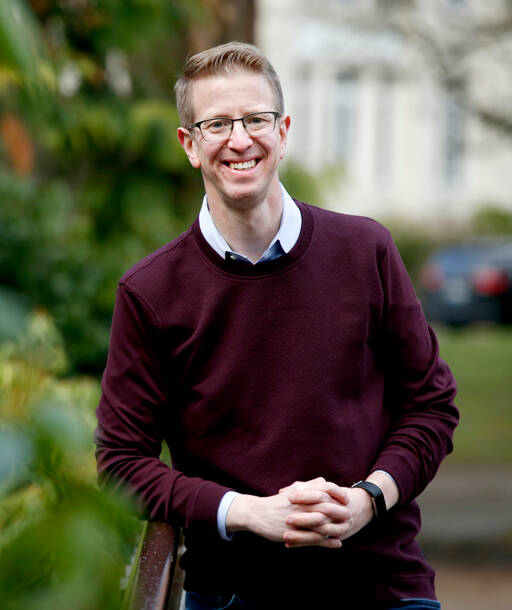
PORT ANGELES — Derek Kilmer got to see a different view of the area where he was born and raised and represented in Congress from 2013-2025 — through the eyes of outsiders.
Kilmer, a Port Angeles native, spent two days this week with fellow members of the bipartisan Brookings-AEI Commission on U.S. Rural Prosperity, who toured the North Olympic Peninsula and came away impressed by what the region has to offer — things he said locals can sometimes lose sight of.
“People would say, ‘What extraordinary natural resources, what extraordinary local leaders. This port is amazing. The college is amazing,’” said Kilmer, who is now senior vice president for U.S. Program and Policy at the Rockefeller Foundation, a philanthropic organization that funds work on health, food security, energy and economic issues.
“If you’re from here, you almost take it for granted.”
The commission, co-chaired by former Sen. Heidi Heitkamp, D-N.D., and former Gov. Chris Sununu, R-N.H., has been visiting rural communities, holding hearings and interviewing residents, business owners and local officials. Having already stopped in North Dakota, Minnesota, the Mississippi Delta and Eastern Kentucky, the bipartisan group arrived on the North Olympic Peninsula on Tuesday.
On Wednesday, the group took a bus tour through Port Angeles and along the waterfront, then traveled to Forks to hear from representatives of the Jamestown S’Klallam, Quileute and Hoh tribes and from the power, utility and timber industries.
That evening at Lake Crescent Lodge, they learned about the recreation and tourism sectors.
At Peninsula College on Thursday, the commission heard from panels on rural economic development and the workforce and the maritime industry.
Kilmer said commission members were struck by the federal government’s large footprint on the Peninsula, “between the Coast Guard, the Department of Energy lab, the national park and the forest service.”
With about a third of the nation’s roughly 3,000 counties economically distressed, the commission’s work was overdue. Visiting rural communities is central to that effort, he said.
The commission plans to distill what it has learned from places like the North Olympic Peninsula into a report due in the fall of 2027.
“It hasn’t been since the Nixon administration that there has been a coherent, articulated rural strategy,” said Kilmer, who added, “Folks in marble buildings in Washington, D.C., do not have a monopoly on good ideas.”
People in places like the Olympic Peninsula, he said, can show how federal decisions land on the ground — how an idea that sounded good in Washington affects a local hospital, for instance — and many of those fixes can be made administratively, without new spending.
At the Rockefeller Foundation, Kilmer said he is focused on much the same question he worked on in Congress: How to connect more people in more places to economic opportunity. The foundation recently launched a program aimed at connecting people to good jobs, prompted by the fact that, while overall employment numbers are strong, much of the growth is concentrated in relatively few places.
“How do you empower people and communities to navigate that economic disruption rather than getting hammered by it?” Kilmer said. “No matter where you live, you should have a shot at the American dream.”
________
Reporter Paula Hunt can be reached by email at paula.hunt@peninsuladaillynews.com.


Best of Olympic Peninsula