
ISSUES OF FAITH: Fear, courage and truth
Published 1:30 am Friday, June 26, 2026
“Be strong and let your heart have courage,” (Joshua 1:6).
IN THE TORAH portion Schlach-Lecha (Numbers 12:1-15.41), we read the story of the Israelites reaching the border of the land they are about to enter.
Moses sends scouts to observe the land and its people. When they returned, they reported that the land is indeed good and fruitful and flows with milk and honey. But all the scouts except Joshua and Caleb said they felt they “were like grasshoppers to ourselves and so that is how we must have looked.”
However, Caleb and Joshua’s report was upbeat and optimistic, reporting that the Israelites would be able to overcome any possible adversity, and urged the people to move forward.
As their courage began to falter, the people began to fall into despair. So God told Moses to listen to Caleb and Joshua’s report and not fear to enter the land. Despite their fears, it took courage to walk into the unknown.
In Jewish tradition, we are told we must always have the courage to challenge decisions and viewpoints that are clearly immoral or based on lies. A core principle in Judaism is that we should always have the courage to stand for the truth, and speak out against the falsehoods and evil amongst us. “Know that truth and righteousness are the ornaments of the soul, and they provide the individual with everlasting courage and confidence,” (Rabbi Moshe ben Maimon).
Finding the courage to stand up to power means we must conquer our fears. Throughout history, we have seen countless people who stood up against a wrong, though it may have cost them friends, family, their job, their political office or even their lives. A person with integrity does what is right, not what is safe or what will keep them in power. They must set aside their fears and have the courage to act.
A desire to obtain or stay in power can make people lose all sense of right and wrong, so it can take strength and courage to challenge them.
Abraham Lincoln said it well: “Nearly all men can stand adversity, but if you want to test a man’s character, give him power.”
Even today, we are seeing those who are challenging people in power face revenge and retribution. Still, they have the courage to not let their fear overwhelm them.
One of the dangers of continuing to allow lies to spread is that they can become accepted as the truth, and it becomes difficult to “undo” the damage they cause.
“Repeat a lie often enough and it becomes the truth,” is the propaganda often attributed to the Nazi Joseph Goebbels. Once a lie takes hold, it spreads like wildfire and the truth is buried in the flames.
“A lie can travel half way around the world while the truth is putting on its shoes,” warned Mark Twain. In today’s world of social media, lies can “become truth” in a matter of moments.
Avraham ibn Hadai, a Jewish 11th century Spanish philosopher, physician and political figure, explained how insidious lies can be, and warned people of faith and integrity to avoid them: “Prefer death to a lying word, for the ripple-effect of its plunder is worse.”
All faith traditions warn us to avoid lying or bearing false witness, and stress the importance of honesty. The Talmud teaches that truth is the very foundation of the world, and when falsehoods are allowed to spread, we are nudging at that foundation.
We should heed the great Jewish philosopher Maimonides (1135-1204): “Let the truth and right by which you are apparently the loser be preferable to you to the falsehood and wrong by which you are apparently the gainer.”
We must find the courage to stand up for truth, and not remain silent when hatred and deceit are accepted as the lens through which we are told we must view the world. We should emulate Esther’s courage, which illustrated that ordinary people can affect change and how powerful public resistance can be in confronting lies and speaking the truth.
We must be less concerned with “winners” and more with those who have the honesty and integrity to always speak the truth and stand up to evil.
The foundation of the world may depend on it.
Kein yehi ratzon … may it be God’s will. Shalom.
_________
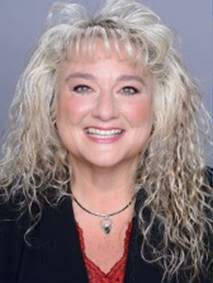
Issues of Faith is a rotating column by religious leaders on the North Olympic Peninsula. Suzanne DeBey is a lay leader of the Port Angeles Jewish community. Her email is debeyfam@olympus.net.


Best of Olympic Peninsula