HORSEPLAY: Help your local animals, spay and neuter them
Published 1:30 am Saturday, March 14, 2026
I’M GOING TO journey away from our local horse world to champion those in our community who are working hard to combat the current unwanted dog and cat overpopulation and overcrowded shelter crisis through veterinary work, along with animal rescue organizations that help the animals traumatized by it.
Veterinarian Patricia Dowell, or Dr. Pat as she’s better known, provides both through her two offices — Best Friends Pet Center in Port Angeles and Dr. Pat’s Pet Care in Forks. She’s in the latter two days a week, not because she needed the work, but because “Forks didn’t have a veterinarian.”
Dr. Pat has dedicated her life and skills trying to stop the unwanted breeding cycle before it starts by hosting low-cost — or even free if she has the sponsors to pay for someone who can’t afford it — spay/neuter clinics.
“I’ve always been passionate about providing low cost spay/neuter, vaccination and microchipping to those with lower income,” she said. She’s referring to those with a limited income who qualify for Washington State’s Economic help programs such as SSI and food benefits to low-income household programs.
To help keep costs down for all her clients Dr. Pat said she tends to run her practice in a more conservative manner than most. “For example, we don’t require blood work before every surgery, and we don’t do IV fluids on every surgery, all which add to the bill.”
She said in 2025, between her two business clinics and the low-cost clinics, they spayed or neutered over 800 dogs and cats — almost 600 through PAIR alone. “So, I think we’re making a difference.” Those positive results have motived her team of workers and volunteers to set a goal of hosting a low-cost clinic each month.
Ponder this: If half that number, 400, had just one litter before turning 1, with 8 being the average size, that amounts to 3,200 more puppies and kittens being born in Clallam County in 2025.
If half that number, 1,600, had an unwanted litter before turning 1, that could add an additional 12,000 more dogs and cats into the breeding cycle in 2026. And each could have several litters over their lifetime.
Statistically, a great number of those will end up in an overcrowded shelter only to be euthanized. I wonder how many of those would have made loving and loyal pets? I think most. Heartbreaking to think about, isn’t it?
Clinic events
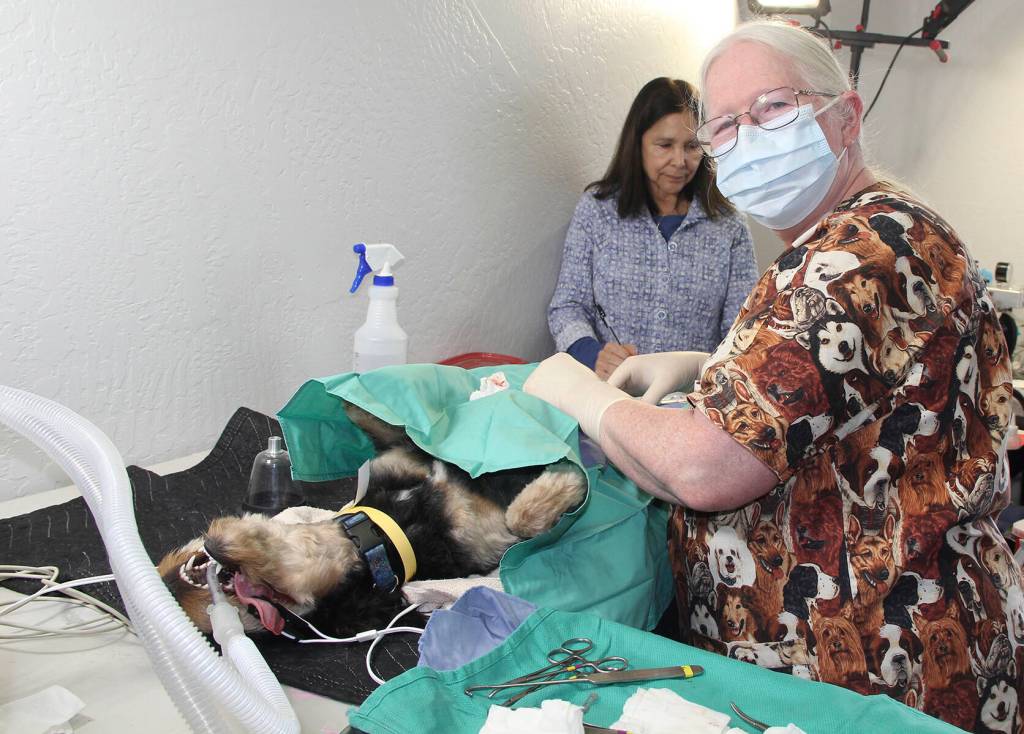
I met up with Dr. Pat in February while she was spaying a female dog at a low-cost spay/neuter, vaccination and microchipping clinic held in a donated facility, the HAAUS Building, in East PA.
Dr. Pat said while there’s long-been too many unwanted dogs and cats ending up in shelters, it was during the COVID pandemic mandatory stay-at-home phase a great many people got dogs or cats, but “there was a shutdown period during COVID when we couldn’t do spays and neuters, which put everybody behind and things have never caught up.”
Compounding the problem were the large number of new pet owners who left their animals at shelters when the pandemic ended, and they returned to their jobs.
“We’ve been in crisis mode ever since,” she said.
No longer satisfied with a mere chipping away at the problem with occasional clinics, she and her team of willing workers and volunteers decided to focus more on stopping the problem before it begins through educating the public why it’s vital to spay and neuter young animals before they’re capable of breeding, along with holding monthly affordable or subsidized spay/neuter, core vaccinations, microchipping clinics.
Partners include non-profits Pawsitive Animal Impact Rescue (PAIR), Friends of Forks, Pet Pals and Pet Helpers. On the day I was there retired Jefferson County veterinarian Dr. Jenny Johnson, was working, as well as licensed vet techs and a slew of volunteers who are also dedicated to helping the cause — West Side Pizza even donated pizza’s for the crew.
“I’d really like to see more other high-volume veterinarians involved so we could hold larger clinics,” said Dr. Pat.
One immediate need is to get more good-sized facilities donated in different areas that have the space, electricity, heat and water to host the clinics.
“It doesn’t need to be fancy, we just need good sized area, with parking,” said PAIR coordinator Carolyne Brock. “We come in with a crew, we set up, we clean up when we leave, and graciously welcome anybody that can give us a good space with good lighting and good outlets and we really need a little heat to keep the animals comfortable under sedation.”
Join PAIR for its Spay-ghetti dinner fundraiser and silent auction on April 11, 6 p.m. at Mt. Pleasant Grange in Port Angeles. Items include a vacation package at 3 Rivers Resort, Chestnut Cottage gift certificate. Tickets are $45 and available on the Pawsitive Animal Impact Rescue Facebook page or at https://givebutter.com/spay-ghettiPAIR
Call PAIR at 360-775-6648 or email PAIR.clallam@gmail.com with questions, to volunteer, to donate space and/or to get your pets on the list for an upcoming clinic.
Best Friends Pet Center is located at 1004 W. 16th Street in Port Angeles. 360-452-7387. Dr. Pat’s Pet Care is located at 41 Bogachiel Way. 360-374-5566.
“Please help stop the cycle by spaying or neutering your own pets,” implores Dr. Pat, “and, if you can afford it, donate to high volume spay and neuter programs so that we can do more pets for people who can’t afford it.”
________
Karen Griffiths’ column, Peninsula Horseplay, appears the second and fourth Saturday of each month.
If you have a horse event, clinic or seminar you would like listed, please email Griffiths at kbg@olympus.net at least two weeks in advance. You can also call her at 360-460-6299.