
Drone images show Southern Resident orcas to be be in good health
Published 12:01 am Sunday, October 25, 2015
By Phuong Le
The Associated Press
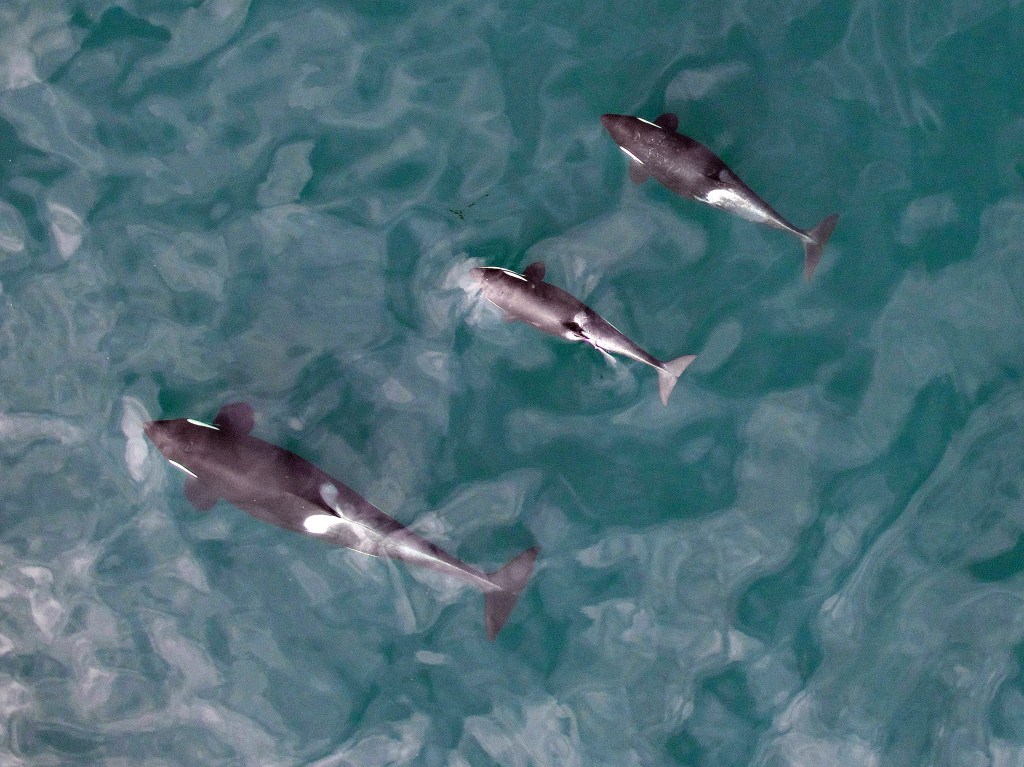
SEATTLE — Federal biologists flying a drone have taken thousands of rich images of endangered Southern Resident orcas showing the whales are in good condition this year and that several appear to be pregnant.
The drone flights over the San Juan Islands captured striking photographs of all 81 members of the small population of orcas that spend much of their time in the state’s inland waters, mostly east of Port Angeles.
Researchers with the National Oceanic and Atmospheric Administration and Vancouver Aquarium in British Columbia are using those images to measure and track the health and growth of individual orcas over time.
“We’re really answering a simple question: Are these killer whales getting enough to eat?” said John Durban, a marine mammal biologist with NOAA’s Southwest Fisheries Science Center in La Jolla, Calif.
The Southern Resident killer whales have lost about 20 percent of their population since the 1990s.
Dwindling food sources and contamination are two reasons scientists blamed for their decreasing numbers.
Baby boom
This year, it appears the population is in good shape, even experiencing a baby boom with five new calves born in the past 12 months or so.
It suggests that feeding has been good, Durban said.
Researchers want to know how fat or long the whales are from year to year, how well they are reproducing, how their body conditions change and how those factors might correlate with the amount of salmon they have to eat.
Several appeared to be pregnant, but Durban said they won’t know how many until they do more analysis.
Scientists are using drones to track and monitor wildlife in the U.S. and elsewhere.
They have used drones to count penguins and seals in Antarctica as well as stellar sea lions in Alaska’s Aleutian Islands, and to take breath samples of humpback whales off New England.
Some say drones can be a cost-effective, efficient tool to monitor birds, whales and other wildlife in places that are hard to reach and where a quiet, small device can prevent wildlife disturbance.
Scientists previously used helicopters to photograph orcas in the Pacific Northwest, but those flights were more expensive and the aircraft flew at much higher altitudes.
NOAA’s Durban said the drone they used this summer hovered about 100 feet over the whales, offering crisp, detailed views they previously had not been able to obtain.
He and others said it didn’t appear to disturb the orcas.
Family relationships
Some of the images revealed the close family relationships between orcas, including a baby orca nursing with its mother and another of two whales bringing salmon to a mother and her calf.
In one case, the scientists captured images of a pregnant whale and then later of that whale with a newborn orca.
Over several weeks in September, Durban and his colleagues remotely operated a drone from a boat.
It weighed about 4½ pounds equipped with a specialized camera and other equipment.
The idea is to measure the whales over time to see how fat or thin they are in good or bad years for salmon runs.
The Southern Resident orcas primarily eat chinook.
A 10-year study of Southern Resident orcas, which used input from the Port Townsend Marine Science Center, found that the orcas are among the most contaminated marine mammals.
“What we’re interested in is change over time that we can attribute to environmental conditions,” said Lance Barrett-Lennard, a senior marine mammal scientist at the Vancouver Aquarium.