
Volunteers sought to count marmots in Olympic National Park
Published 12:01 am Thursday, April 18, 2013
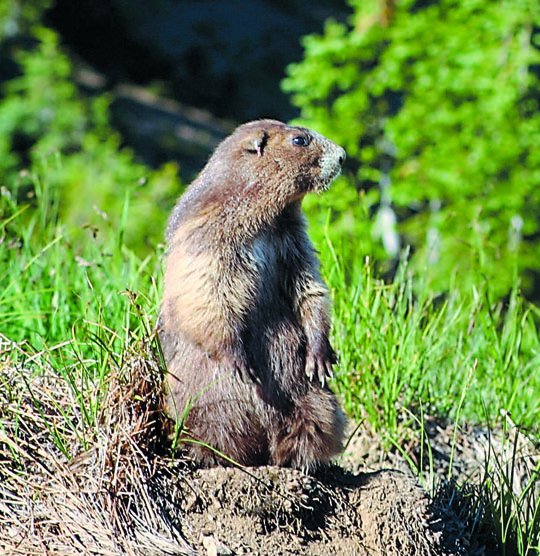
OLYMPIC NATIONAL PARK — For the fourth year in a row, volunteers are offered the opportunity to hike into the park to count Olympic marmots.
The Olympic marmot, Marmota olympus — the official endemic mammal of the state — is found only in the alpine meadows of the Olympic Mountains.
Marmots are sociable animals, chirping and playing with each other as they live in family groups, with home ranges between a half-acre to 5 acres, mostly above 4,000 feet in Olympic National Park and the surrounding national forest.
Each year, small groups of volunteers hike to designated survey areas to gather information about marmot presence and distribution.
Tracking and monitoring these changes allow wildlife managers to evaluate the population’s status on an ongoing basis.
Last year, the U.S. Forest Service coordinated with the park to monitor the surrounding Olympic National Forest, expanding monitoring efforts to the species’ entire range.
Application deadline
The 2013 application deadline is May 1, but the application period may close earlier if enough eligible volunteers have been accepted, or last longer if some trips remain unfilled.
Volunteers must be capable of hiking to and camping in remote areas, be comfortable navigating off-trail and be able to work on steep slopes.
Most survey trips involve a hike of between 5 and 10 miles over a period of one to two days, with steep climbs to get to the survey area.
Volunteers then camp out and search for marmots for two to four days.
A limited number of day-hike assignments are also available for the Hurricane Hill, Klahhane Ridge and Obstruction Point survey area trips.
To ensure safety, volunteers must travel and monitor with a partner.
Up to six people can travel in the same group, breaking into smaller groups to visit individual survey areas.
Volunteers between the ages of 13 and 17 must be accompanied by responsible adults.
Volunteers have one training day that features both classroom and field training. They are responsible for their own transportation.
Camping fees will be waived at Heart O’ the Hills and other front-country sites for the evening before training.
Park entrance and backcountry fees also will be waived for volunteers.
Marmots, usually brown or at times tan or black, are housecat-sized rodents with long, bushy tails and can weigh 15 pounds or more before they enter hibernation in September or early October.
They are vegetarians, preferring fresh, tender, flowering plants such as lupine and glacier lilies.
In May and June, they will eat roots and may even gnaw on trees.
They can double their body weight in the summer and use stored fat during a seven- to eight-month hibernation.
Their numbers declined in the 1990s and early 2000s, at least partly because of non-native coyotes, the park said, adding that the species also is sensitive to climate change.
Monitoring program
In 2010, the park initiated a monitoring program that enables volunteers to record the presence or absence of marmots in many meadows throughout the park.
More than 90 volunteers participate in the project each year. They come from all over the Olympic Peninsula, as well as from the Seattle/Tacoma area and even as far away as Portland, Ore., and British Columbia.
“Over the last three years, the outstanding work and dedication of our marmot-monitoring volunteers has provided important information for continued protection of the Olympic marmot,” said Olympic National Park Superintendent Sarah Creachbaum.
“Citizen Science programs provide valuable data and unique opportunities for volunteers to take part in research that influences the management of their park.”
The program is made possible by donations through Washington’s National Park Fund.
To learn more about the park fund or to donate, visit www.wnpf.org.
For more information about marmots, visit http://tinyurl.com/watchmarmots.
A short video about the project and the marmot-monitor training can be found at www.nwparkscience.org/node/1044.



Best of Olympic Peninsula