
BACK WHEN: Ghost ship: Terrible ideas lead to tragedy at sea
Published 1:30 am Saturday, August 1, 2026
THROUGHOUT HISTORY WE have stories of tragic events. Sometimes it is a tragic series of events. Sometimes people’s poor decisions lead to terrible outcomes. The story of the Ryo Yei Maru may fit into this theme.
The story of this vessel and her crew became the local story of a ghost ship. It might be the type of scary story you would tell children around the campfire.
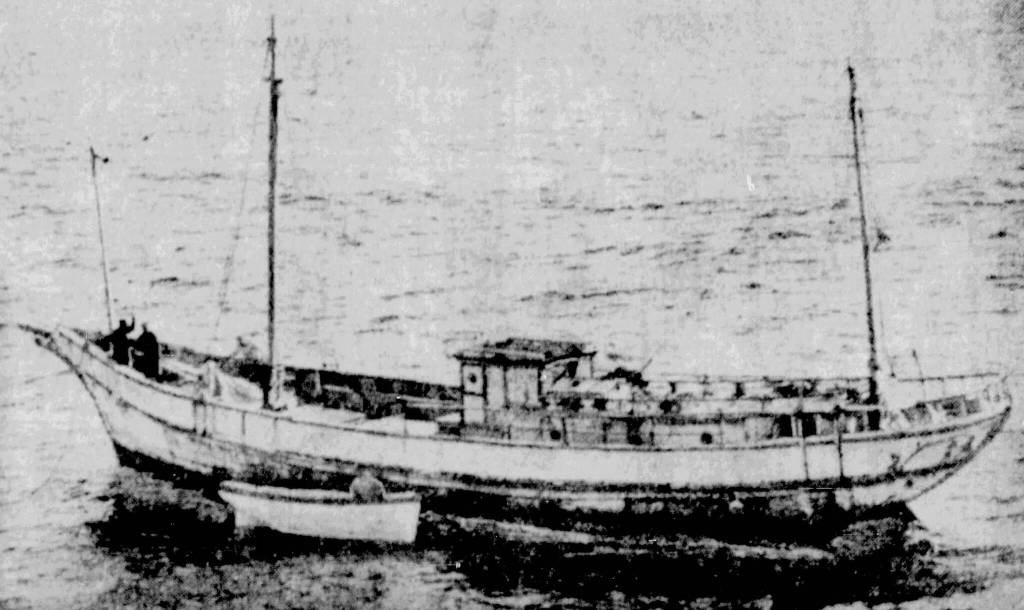
The Ryo Yei Maru was an 85-foot, two masted, 42-ton, Japanese fishing vessel. It was built in the fall of 1924. During this time in history most smaller vessels did not have radio equipment.
I need to remind you that English spellings of Japanese words and names will vary. The Ryo Yei Maru may be spelled Ryoei Maru in other documents.
The Ryo Yei Maru had a crew of 12 men. The crew planned to fish for tuna and would be out to sea for a while. They had provisions of 30-days’ worth of rice, two barrels of water, one barrel of Saki, and other provisions. The captain was Miki Tokizo.
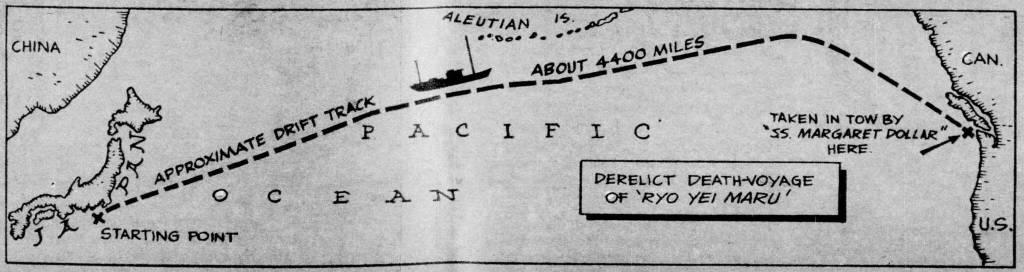
Day 1 – 12/05/1926. The whole effort started out poorly. The boat departed from Miura-shi, Japan. They soon encountered bad weather and entered Choshi Port, Japan, on Dec. 6. On the afternoon of Dec. 7, they departed Choshi setting out to a fishing area about 100 km (62 miles) east.
Day 7 – 12/12/1926. The crankshaft broke. Control and navigation became impossible. The crew set out to make repairs. All they could do was drift in the ocean currents.
Day 10 – 12/15/1926. They had drifted nearly 1,000 miles from Choshi. On this day they spotted another fishing vessel and raised their distress flag, but the other boat did not see them.
The Ryo Yei Maru was trapped in the Black Current. This is a powerful current in the North Pacific. It originates in the Philippines and flows past Japan across the Pacific towards the United States. It is named for the cobalt-blue appearance of the waters. This current is why we would find glass fishing floats on our ocean beaches.
Day 11 – 12/16/1926. The crew spotted two different steamers. They made a fire in their frying pan to raise smoke but neither vessel saw them.
They seemed to have enough food on board for a while. The captain thought they had enough food for four months. They were able to fish, collect seaweed, and collect rainwater. Still, it was not a good situation. Imagine being on a small boat drifting on the ocean with no land in sight.
Day 18 – 12/23/1926. The American Mail Line freighter “West Ison” stopped to offer assistance. According to their ship’s log entry, “We found a wooden boat adrift on the waves in the Pacific Ocean about 1,000 km from Seattle. Even though it was close, there was no reply to our rescue signals. The name of the boat was Ryou-Yei-maru.
About 10 sailors stood on deck staring at us, but no one of them replied to our calls.” The Captain of the West Ison urged the crew to abandon their vessel and board the freighter.
They refused. Captain Tokizo still hoped the engine could be repaired.
Whatever the reason, it was a tragic decision.
The records aboard the Ryo Yei Maru did not record this encounter.
The west winds and the current continued to push them eastward.
Day 21 – 12/26/1926. Captain Miki Tokizo made the decision to ride the winds to the United States rather than try to return to Japan.
For the next 137 days they fought hunger, despair, and illness. They also battled gale-force winds and monsoon rains.
Day 90 – 03/05/1927. The food ran out. Malnutrition and beriberi took over.
Day 94 – 03/09/1927. The first sailor, Denjiro Hosai, died.
Day 135 – 04/19/1927. On this day the tenth sailor died. The only remaining sailors were Captain Miki Tokizo and Gennosuke Matsmoto.
These two survived another month but became so ill they could not move their arms or swallow food.
Notes were scrawled into a board inside the cabin. It recorded the crew’s mounting despair and the exhaustion of the food. It also named the crew members. These were scrawled onto a board so a record would more likely survive. A separate pencil journal was discovered later which provided more details of their desperate journey.
Day 157 – 05/11/1927. The last entry was made into the ship’s journal.
Day 158 – 05/12/1927. The last crew member likely died. The crew was dead, but the Ryo Yei Maru was not.
Day 330 – 10/31/1927. After another 172 days, the derelict Ryo Yei Maru was spotted by the steamship Margaret Dollar en route from San Francisco to Seattle. It was about six miles offshore of Shi Shi Beach, Makah Indian Reservation.
Crew members from the Margaret Dollar boarded the Ryo Yei Maru to find scattered human remains, twisted rigging, and a dismantled engine below deck. The Margaret Dollar secured a tow line and towed the boat to the quarantine station at Port Townsend, arriving on Nov. 1, 1927. U. S. Customs took possession of the vessel, and the Japanese Consulate was notified.
The scattered remains of about 10-12 people were found. Two sets of remains, presumed to be the last two survivors, were found partially mummified. They were in bunks as if sleeping.
Later in November, a Buddhist funeral ceremony was held in Seattle for the 12 crew members. The two mummified bodies were cremated. The cremains, locks of hair and personal letters found aboard the boat were delivered to their respective families.
Efforts were made to return the vessel to Japan. But the owner asked for the boat to be burned so it could “rest in peace.”
Day 388 – 12/28/1927. The Ryo Yei Maru was burned at Richmond Beach near Seattle.
Japanese communities in the U. S. responded with charitable contributions to support the crew’s families.
Let us always remember that these sailors were real people with real names: Captain Miki Tokizo, Gennosuke Matsmoto, Denjiro Hosai, Naoe Jotaro, Steji Izawa, Hatsuzo Terada, Yonosuke Yokota, Fujiyoshi Kuwata, Torikichi Mitani, Ryoji Tsujiuchi, Yukichi Tsumemitsu, and Uehira Yushiro.
The Black Current brought other Japanese vessels west over the years. The Ryo Yei Maru was not the only ghost ship to drift to the west coast of North America.
We can all learn from this story. We, too, can have times of trouble and despair.
If help is offered, take it. It could save your life.
________
John McNutt is a descendant of Clallam County pioneers and treasurer of the North Olympic History Center Board of Directors. He can be reached at woodrowsilly@gmail.com.
John’s Clallam history column appears the first Saturday of every month.




Best of Olympic Peninsula