
ISSUES OF FAITH: Choosing moral leaders
Published 1:30 am Friday, July 24, 2026
“When the cares of my heart are many, your consolations cheer my soul,” (Psalms 94:19).
OUR WORLD CAN sometimes feel dangerous and chaotic, and we are in need of good leaders, both religiously and politically.
How can we find those who would best navigate us through difficult times with integrity, justice and a firm moral compass?
As we approach another election season, I suggest we choose our leaders as we would our friends.
Do we want to surround ourselves with people who think only of themselves, are full of anger and fear, and cause us to suspect those different from us?
Or do we want someone who reflects empathy, loving-kindness, justice and sees God’s Holy Spark in everyone?
These values can be found across the political spectrum and in all faiths.
No group has a monopoly on them.
The one unifying concept in every spiritual path is the principle found in the Golden Rule.
Those struggling with making a decision about any leader, whether they are seeking a local or national position, would do well to use the standard of the Golden Rule to measure the aspirant’s personal values, ethics and morality.
Have they worked with all their heart to bring about tikun olam, the repairing of our world? Do they reflect the values that our faith teaches us? Do they espouse justice for all, taking care of the poor and desperate among us, housing the homeless, feeding the hungry, the immigrant, and taking care of those alone in the world? Have they resisted making material wealth their “god”? Have they spent their lives trying to fulfill the goals encouraged in all faith traditions? Would they strive to further these values?
In Covenant and Conversation, Rabbi Jonathan Sacks points out the importance of justice in Judaism. “Why then is justice so central to Judaism? Because it is impartial. Law as envisaged by the Torah makes no distinction between rich and poor, powerful and powerless, home-born and stranger. Equality before the law is the translation into human terms of equality before God. Time and again the Torah insists that justice is not a human artifact: ‘Fear no one, for judgement belongs to God,’ (Deuteronomy 1:17). Because it belongs to God, it must never be compromised — by fear, bribery, or favoritism. It is an inescapable duty, an inalienable right. Judaism is a religion of love: you shall love the Lord your God; you shall love your neighbor as yourself; you shall love the stranger for you were once strangers. But it is also a religion of justice, for without justice, love corrupts (who would not bend the rules, if he could, to favor those he loves?). It is also a religion of compassion, for without compassion, law itself can generate inequity. Justice plus compassion equals tzedek, the first precondition of a decent society.”
“Tzedek, tzedek tirdof,” Justice, justice shall you pursue is a foundational commandment in the Torah (Deuteronomy 16:20).
The repetition of the word “justice” emphasizes that not only the outcome, but the means used to achieve it, must be righteous. In other words, the ends do not justify the means.
Another important characteristic to be considered in choosing our leaders is whether they are what Rabbi Karyn Kedar calls “sustainers.” Do they nourish people’s souls, seeing the Divine spark in everyone? Are they positive about humanity and see the good in people, bringing out the best in everyone around them?
If they were our friend, would they be a person whose company we would want to keep? Do they reflect the life we wish to live? Kedar encourages us to surround ourselves with people who see that our hearts are filled with love and grace.
Would this person fit that description?
By choosing our leaders as we would our friends, we can envision them as true “sustainers” in our lives.
“The people in your life mirror your world. If they are hollow, dull or cruel, so will you see your life. If they are loving, inspirational and supportive, you will reflect their beauty,” (Kedar).
We must ensure that all our leaders reflect the best in humanity.
Kein yehi ratzon … may it be God’s will. Shalom.
_________
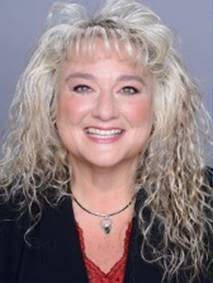
Issues of Faith is a rotating column by religious leaders on the North Olympic Peninsula. Suzanne DeBey is a lay leader of the Port Angeles Jewish community. Her email is debeyfam@olympus.net.



Best of Olympic Peninsula