
Conservation burial ground under consideration
Published 1:30 am Wednesday, April 15, 2026
PORT TOWNSEND — Jefferson Land Trust is taking steps toward establishing a conservation burial ground on a property it already owns.
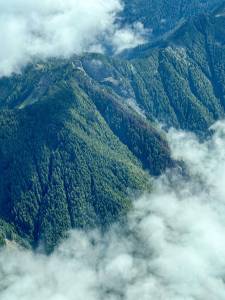
The largely forested 75-acre property had some logging done on two portions of it about 20 years ago, said Erik Kingfisher, the land trust’s director of stewardship and resilience.
Following wetland and hydrogeological studies on the property, the land trust has come to the conclusion that one of those harvested areas, about 8 to 10 acres in size, would make a good location for burials.
There are different ways to manage approaches to where and how densely burial sites could be situated, Kingfisher said. Standards from the Conservation Burial Alliance and Green Burial Council suggest that plots should take 20 by 20 feet, with the best location within that space chosen for burial, he added.
The land trust has been learning about how to perform the burials in ways compatible with the underground ecology.
“We obviously wouldn’t want to be creating burial sites right at the base of large trees with all their root systems and cutting off a bunch of big roots,” Kingfisher said. “Part of the purpose of this property is to grow an old complex forest over time.”
The forest, which Kingfisher said would be a diverse forest, also would be an aesthetic location for families to perform burial ceremonies or visit.
The property could secondarily serve as a site for a memorial forest, where people could spread the ashes of their loved ones.
“In memorial forests, there would be a suite of options, like this tree or that tree or that tree or that tree,” Kingfisher said. “We could just identify those places and those trees that are well positioned to be sort of functioning as memorial trees.”
Land trust officials have been discussing and pursuing options for a conservation burial ground for about 15 years.
Its last effort to provide the option involved a property on Marrowstone Island.
While early conversations were positive and the property itself seemed like a good fit, opposition from neighbors eventually proved strong enough that the land trust concluded its pursuit.
The land trust already had engaged with Jefferson County about permitting requirements.
Kingfisher noted that the next step for the property currently under consideration is to share the land trust’s vision for the property with neighbors.
The site’s location is not being made public before that step has occurred, he said.
Should that process go well, the land trust likely will begin the permit application process with the county toward late summer.
Kingfisher noted that while the Marrowstone Island permitting process was incomplete, the land trust had yet to run into any barriers.
He also said permitting cemeteries in Jefferson County hasn’t taken place for some time.
“Essentially, the cemeteries in Jefferson County were all formed 100 to 125-plus years ago,” Kingfisher said. “There may be some exceptions to that, but nobody’s really done this and the regulatory process for something like this doesn’t appear to have a road map.”
While the map is unknown, land trust officials feel good about the potential of moving through the process, Kingfisher said.
“The science is there to demonstrate this property is well suited,” Kingfisher said. “We’re going to reach out to the neighbors. The regulatory path, we could see it working.”
Kingfisher noted that more than 300 community members have expressed interest, whether due to an alignment of values, a personal desire for natural burial, or both. He characterized that interest as centered around contributing to conservation in one’s final act and in individuals’ personal feelings around being buried in diverse natural spaces.
“This is an end-of-life option that actually helps,” Kingfisher said. “It helps protect land. It helps restore land in perpetuity and is not creating a new impact. I think that’s part of the ethic or the ethos that people are subscribing to when choosing this end-of-life option.”
Part of the conservation value comes from reducing the effect of embalming chemicals leaching into the soil, Kingfisher said. Cremation, another primary practice, has carbon effects avoided by the natural burial method.
The burials that take place on the property also could contribute to the cost of forest management on the property.
“The primary purpose is really for us to take care of this place for its ecological values,” Kingfisher said.
Conservation burial brings up a sense of time for people, Kingfisher said. The land trust is often thinking on large time scales, he added.
Land the trust protects is protected in perpetuity.
________
Reporter Elijah Sussman can be reached by email at elijah.sussman@peninsuladailynews.com.
Best of Olympic Peninsula