
Kelbon joins race for House position
Published 1:30 am Saturday, April 11, 2026
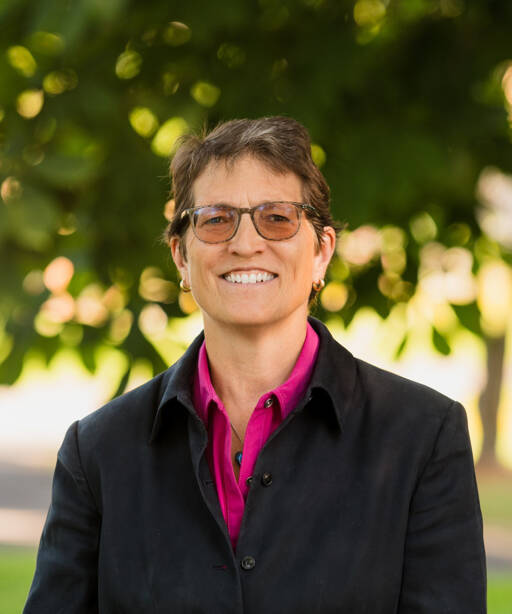
QUILCENE — Marcia Kelbon of Quilcene plans to run for the 24th Legislative District’s state House Position 2 this year.
Kelbon, who ran for state Senate as a Republican in 2024 and for Jefferson County commissioner in 2022, currently serves as a Quilcene Fire Department commissioner.
Kelbon recently resigned from party positions to run as an independent. She joins Democrat Kaylee Kuehn of Sequim, Republican Aiden Hamilton of Port Angeles and Democrat Patrick DePoe of Neah Bay in vying for the seat that will be vacated by the retiring state Rep. Steve Tharinger, D-Port Townsend.
Filing week opens May 4. The primary will take place Aug. 4 and the general election will be conducted Nov. 3.
Kelbon moved to her Quilcene property in 2020, having retired shortly after the start of the COVID-19 pandemic. Her decision to engage in politics is motivated by the challenges facing younger generations in achieving the quality of life that she was able to access.
“I’d had such a good run here in Washington state,” Kelbon said. “I started looking at the challenges for my kids and my grandkids to do the same kind of things I did here. How difficult it was for the community at large to build a house, buy a house and get a decent job, get a decent education. I just felt like we weren’t really on the right track and needed to sort of course correct.”
Kelbon, who describes herself as socially respectful of all types and financially conservative, criticized the ways that Washington penalizes success through fiscal policies and regulatory hurdles.
“Other states take an approach of offering financial incentives to create high-powered, high-paying jobs,” Kelbon said. “Here, we penalize that with financial disincentives, which leads to less of those jobs and less of that business and less of that revenue from those companies.”
She specifically referred to the state capital gains tax and proposals for statewide taxes on higher earnings.
While the strategies may have short-term benefits, Kelbon said the long-term effects will be economic drain.
Kelbon said she believes her experience as a mediator will serve her in finding a middle ground between what she called the extremes of the two-party system.
“We have a state that goes one direction and a country that goes in the other,” Kelbon said. “I am tired of it. I don’t think it’s healthy for our country, the state or individually.”
Kelbon said she will caucus with whichever groups want to work with her and noted that there is a movement to organize a group of centrists in the Legislature.
“Legislation comes from one-on-one meetings as well,” Kelbon said. “I have a pretty healthy, successful track record of meeting disputes in my line of work, being able to see both sides and getting people towards a bill they can live with.”
Kelbon said her combination of legal, technological and business background puts her in a good position to help course correct policies that prevent job creation, business growth and affordable housing development in the district, which includes Clallam and Jefferson counties and parts of Grays Harbor County.
On housing, Kelbon argued for more flexibility within the state Growth Management Act to allow for denser development in specific rural hubs.
“Under the Growth Management Act, you have your designated urban growth areas, but then you have these areas of more enhanced rural development, your historic village centers,” Kelbon said. “Give people a chance to get into a property that isn’t going to cost $600,000. I’m not saying that growth management is bad, it’s a matter of balance.”
Kelbon also wants to find ways to make more progress on education, homelessness and infrastructure.
On education, she noted that while the state spends roughly $20,000 per pupil annually, achievement remains below par.
“In my view, the curriculum needs to focus or refocus on core areas of reading and math, and civics and history,” Kelbon said. “I would be in favor of policies that say, ‘No phone access to children in school.’”
On the issue of homelessness, Kelbon argued that the current housing-first approach has not been successful.
“Let’s say, ‘Treatment, together with housing,” Kelbon said. “And empower law enforcement to help us get people into that.”
Kelbon referred to some of the fish barrier projects as being valuable, while others are consuming serious funding in waterways that are unlikely to see fish return. She said she is encouraged by early conversations between tribes and state governments centering on the potential to use some of that money for tribal economic development and some of it for general infrastructure needs for the state.
Kelbon has lived on the Kitsap and Olympic peninsulas since 1981. After she received a master’s degree in chemical engineering, she started a career as a civilian engineer for the Navy at the torpedo station in Keyport (NUWC).
Her interest in expanding intellectually and diversifying the family’s income — her husband also worked at Keyport, and there were concerns around federal government cutbacks — led Kelbon to go to law school.
Kelbon worked as a patent lawyer for about 13 years in private practice before she joined one of her clients in their bio-tech startup venture. There, she served as an executive and as general counsel for more than 19 years, during which she practiced a much broader scope of law, including helping the company work with federal regulatory agencies like the Securities and Exchange Commission (SEC) and the Food and Drug Administration (FDA).
________
Reporter Elijah Sussman can be reached by email at elijah.sussman@peninsuladailynews.com.