Working together gets bigger results
Published 1:30 am Wednesday, March 18, 2026
THE OLYMPIC PENINSULA Narcotics Enforcement Team (OPNET) is a multi-jurisdictional taskforce comprised of four full-time investigators from the Clallam County Sheriff’s Office, Port Angeles Police Department, Sequim Police Department and the U.S. Border Patrol.
Investigators from the Jefferson County Sheriff’s Office, Port Townsend Police Department and the Jamestown S’Klallam Tribe are assigned to specific investigations as needed.
The Clallam County Sheriff’s Office is responsible for the administration and command of the task force, with the Port Angeles Police Department supervising the day-to-day operations of the unit.
The mission of OPNET is to identify, investigate, dismantle and prosecute members of mid- and upper-level drug trafficking organizations responsible for importing and selling controlled substances into Clallam and Jefferson counties.
OPNET works closely with the state Department of Corrections, National Park Service, the Federal Bureau of Investigations (FBI), the Drug Enforcement Administration (DEA) and the U.S. Coast Guard to achieve our mission.
Although the task force’s name reflects its focus on narcotics crimes, OPNET’s work spans the entirety of the criminal code, leading or assisting investigations into firearms crimes, serious assaults, robberies, burglaries, homicides and any number of other offenses.
OPNET’s cooperative relationship with local and federal agencies, as well as police agencies across the state and county, is one reason for OPNET’s level of success.
OPNET is often called upon to track and locate wanted fugitives in Clallam and Jefferson counties, as well as those who flee the county to other jurisdictions.
OPNET is just one of the 16 multi-jurisdictional drug task forces (MJTFs) within the state of Washington. Multi-jurisdictional drug task forces are utilized to investigate drug trafficking organizations whose reach is wider than jurisdictional boundaries, or the investigation of which surpasses the capability of traditional patrol.
Unfortunately, the number and size of MJTFs in Washington has dwindled in recent years due to a combination of legislative changes, shifting of prosecution priorities and most prominent — funding challenges.
In June, like many Washington state MJTFs, OPNET suffered the loss of the Edward Byrne Memorial Justice Assistance Grant program, OPNET’s main funding source.
While the grant still exists, it was altered by the state Department of Commerce away from support of MJTFs and toward support of community programs, crime victim support, and increased data collection and evaluation.
MJTFs continue to work with legislators to secure a reliable funding source.
During 2025, OPNET arrested more than 20 individuals for felony controlled substance violations and other associated serious felony crimes. Ninety percent of our submitted cases were accepted for prosecution, and 100 percent of those cases that have finished the prosecution phase were found guilty.
In 2025, OPNET seized 9,464 grams of methamphetamine, 872 grams of fentanyl, 50 fentanyl pills, 234 grams of cocaine, 101 grams of heroin and 101 dosage units of diverted pharmaceutical drugs (opioids) and 14 unlawfully possessed firearms.
The street value of the drugs seized in 2015 totaled more than $266,942.
OPNET represents jurisdictions which each face special challenges.
We cover larger geographic areas than more populated areas and must address multiple problems concurrently, such as low-level trafficking that adversely affects our quality of life along with longer-term investigations of criminal organizations.
As a result, OPNET plays a critical frontline drug enforcement role.
We often mix street-level enforcement with the upper-level enforcement strategies that are more commonly associated with larger urban task forces to achieve meaningful results.
The reality of the drugs-crime nexus is indisputable.
Drugs are also related to crime through the effects they have on the user’s behavior and by generating violence.
Drug trafficking generates violent crimes, and drug users often commit criminal offenses to support their drug habit.
When local agencies band together to confront drug problems, the results outweigh what a single agency can do alone.
________
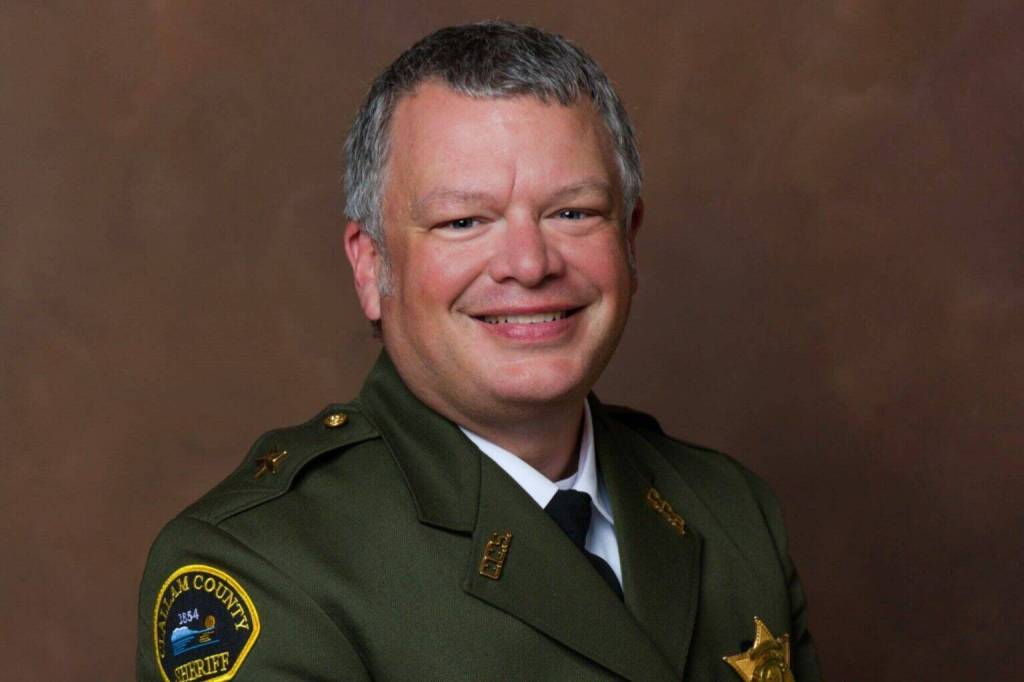
Brian King is the Clallam County sheriff.