
25 years after spotted owl listing: fewer owls, less timber industry
Published 12:01 am Monday, June 22, 2015
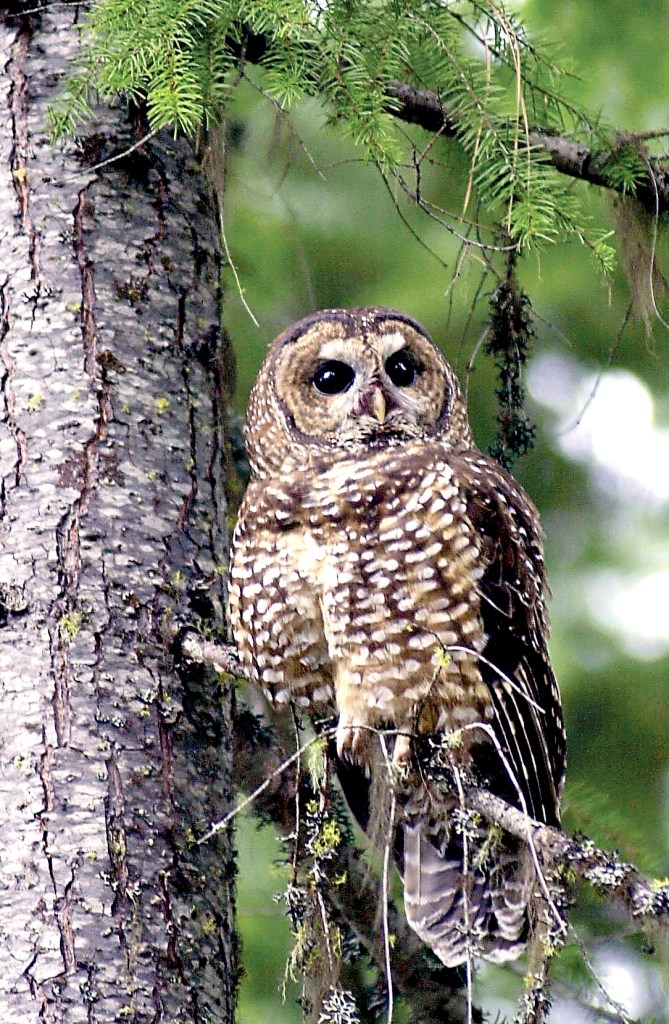
First of two parts
The heated debate over whether to curtail the logging of old-growth forests to protect the northern spotted owl was at full throttle when the federal government declared the bird a threatened species June 22, 1990.
At the time, environmentalists worried that the federal plan would fall short of saving the spotted owl.
Timber interests worried that a wave of environmental rules would gut the Olympic Peninsula’s wood-products industry and devastate communities.
Twenty-five years later, the effects of the landmark decision can be seen in the reams of economic, industry and environmental data routinely gathered by state and federal governments. The outcomes are by turns expected, disheartening and surprising.
A quarter-century of state and federal data and studies show:
■ The number of spotted owls on the Olympic Peninsula declined an estimated 40 percent between 1992 and 2006. The federal study may be updated later this year.
■ Between 1988 and 2013, annual timber harvests by all public and private owners in Clallam, Grays Harbor, Jefferson and Mason counties plunged 64 percent to 753 million board feet.
■ Timber harvests on the Olympic Peninsula’s federal lands plummeted 96 percent to 10.8 million board feet during the same period.
In 1988, 13.2 percent of the region’s commercial timber came from federal lands. By 2013, the figure was 1.4 percent.
■ Private timber harvests on the Olympic Peninsula plunged 61 percent to 598 million board feet during the same period. Over that time, timber companies on the Peninsula supplied between 69 percent and 92 percent of commercial logs.
■ The number of wood-products mills in the Olympic Peninsula’s four counties sank 71 percent to 32 mills between 1988 and 2012.
The Olympic Peninsula’s diminished wood-products industry is the result of 25 years of trends, decisions and events, of which the listing of the spotted owl is one.
Plunging logging levels were anticipated by a 1988 consultant’s report commissioned by the Port of Port Angeles.
The Columbia Consulting Group estimated that the North Olympic Peninsula’s timber supplies could plummet 50 percent in 10 years.
In hindsight, Columbia Consulting missed the mark — by a mere 6 percentage points.
Timber harvests from all ownerships in Clallam and Jefferson counties actually plunged 56 percent during the 10 years that ended in 1998, according to state data.
The consultants partially credited the decline on new environmental regulations.
Certainly, the decision to list the spotted owl had a direct effect on logging in Olympic National Forest. The vast majority of old-growth habitat for the spotted owl was on federal land.
But the consultant’s report also said accelerated logging on private and state lands would reduce future harvests.
The finding was noteworthy because the vast majority of commercial logs on the Peninsula come from private timberlands.
The Olympic Peninsula’s wood-products sector has also been buffeted by dramatic swings in domestic and foreign markets for the past 25 years.
Logging cutbacks on the Olympic Peninsula’s private timberlands coincided with national recessions in 1991, 2001 and 2007-09, state data show.
The Great Recession clobbered the home-building sector, which is a major consumer of lumber.
The Asian log-export market also tanked after 1990, with log exports to Japan plunging 70 percent from 1989 to 2000, according to a U.S. Forest Service study. Asian companies were big buyers of private logs exported through the Port of Port Angeles and elsewhere.
Skirmishes over forest-management policies and timber sales have also curtailed logging on the Olympic Peninsula up to the present day, experts say.
Logging in public forests is frequently challenged by environmental groups, Port of Port Angeles Commissioner John Calhoun said.
“They’re just relentless,” he said.
Despite the rough ride, the wood-products industry remains a bedrock sector on the Olympic Peninsula.
Forestry, logging and wood-product manufacturing employed an annual average of 3,210 workers in the four counties in 2013.
Their combined annual wages that year were about $160 million, state jobs data show.
One of the few beneficiaries of the “new normal” after the listing of the spotted owl appear to be forest researchers.
Foresters in the 1900s spent much of their time learning how to grow trees as a crop.
Now the emphasis is on studying forests as ecosystems, said Jerry Franklin, professor of environmental and forest sciences at the University of Washington.
“Our knowledge of the complexity of these forest systems has deepened,” he said.
The operational and political complexities of managing public forests remain as difficult as ever, however.
In the past five years, the Olympic Experimental State Forest has missed its sustainable harvest projection by 218 million board feet, according to the agency.
Jason Cross is the research coordinator for the Olympic Natural Resources Center in Forks. Sitting in a lobby with large windows overlooking a stand of hemlock, Cross mused on the effects of 25 years of forest and wildlife policies on the Olympic Peninsula.
“I don’t know if it has a happy ending,” Cross said. “It’s a rough one.”
Monday: How the Great Recession cost jobs more than the owl listing.
________
George Erb is a former Peninsula Daily News reporter who covered the spotted owl controversy in the 1990s. He now teaches journalism at Western Washington University in Bellingham. Email him at geoerb@seanet.com.