
Sequim fire commissioners pause bond survey discussion
Published 1:30 am Monday, April 20, 2026
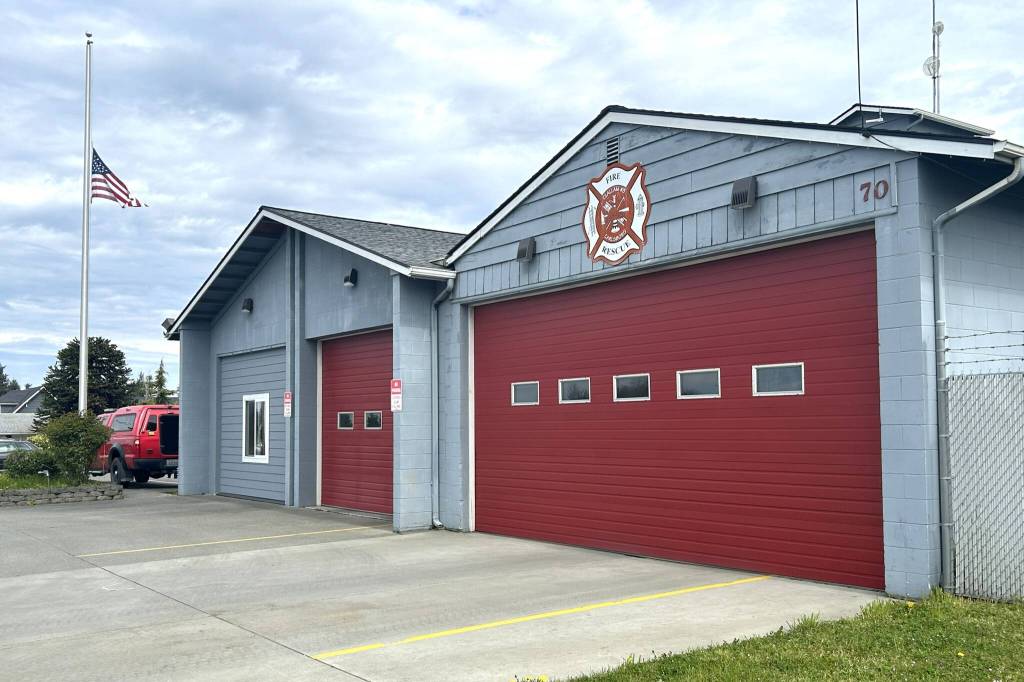
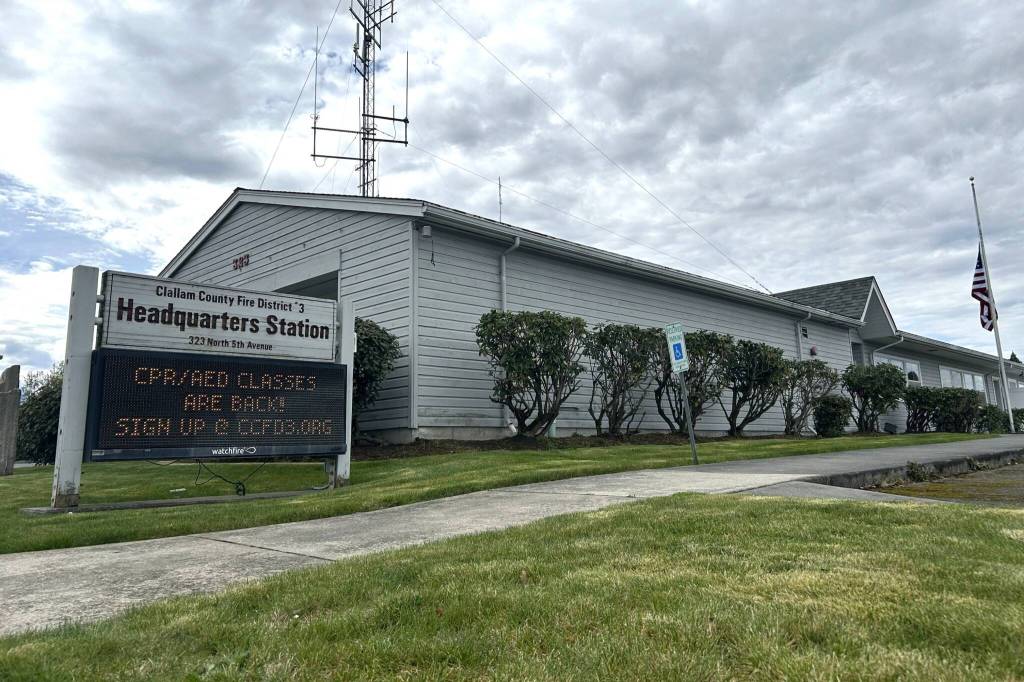


SEQUIM — Clallam County Fire District 3 fire commissioners have agreed to halt talks on a community survey about a potential bond to construct new fire stations and to pause any pursuit board expansion from three commissioners to five.
Their decisions came at their April 7 board meeting with commissioners saying it wasn’t the right time to pursue either issue.
In recent years, fire commissioners have set a priority to replace Carlsborg Fire Station 33 due to its size and condition, and place a new, larger station at the operations and training center nearby on Carlsborg Road.
Discussions have been ongoing about where and when other fire stations should go to match the Sequim area’s growing population.
The district firefighters’ union Local 2933 also has requested commissioners gauge the community’s response for supporting a construction bond, which led fire commissioner Jeff Nicholas to ask staff to investigate potential costs for a survey.
Fire Chief Justin Grider said they chose FM3 Research after considering different survey companies. The firm’s estimate was $25,000 to $31,500 depending on the number of people interviewed and the length of each interview. However, commissioners voted 3-0 against performing a survey.
Commissioner Mike Mingee said the survey was a timing issue as the district likely will ask voters in the next two years to renew and restore its Emergency Medical Services (EMS) levy.
“We cannot afford to not pass the EMS levy,” he said.
He also said the fire district just asked the public to renew its general levy in August.
“My God, people, this is not the time to go back for more,” Mingee said.
The fire district’s general levy lid lift passed on Aug. 8, 2025, with more than 64 percent of voters in favor of increasing the rate from $1.11 per $1,000 of assessed property value to $1.50 per $1,000. Its rate had declined over the years due to levy compression and tax revenue growth limitations.
Voters first approved the $1.50 levy rate in 2004 and restored it in 2018. It makes up about 71 percent of the fire district’s budget.
The district’s EMS levy is now at 34 cents per $1,000, rather than its originally approved rate of $0.50 per $1,000. It makes up about 23 percent of the fire district’s budget.
Nicholas said running a bond is expensive and that would be required to accrue legal costs, such as receiving a bond rating.
“If we run a bond and don’t pass it, what’s the cost of that, one to two (firefighters)?” he said.
Mingee said residents are experiencing sticker shock with their property tax bills, and now isn’t the time to talk about bonds.
Grider later said an EMS lid lift will need to be put on a ballot.
Part of the EMS revenues support local ambulance users who have a balance left over after they are transported to a hospital, he said.
It helps those transported both by the fire district and Olympic Ambulance, and the levy absorbs the remaining costs.
“It’s a good feature, but unfortunately, it’s typically on the worst day of their life,” Grider said.
More discussions
At the Feb. 5 fire commissioners’ workshop about district priorities, multiple firefighters asked commissioners to ask the public if they would be willing to support a bond.
Firefighters also said waiting too long will increase costs for future fire stations and potentially cut into expenses to hire more firefighters or paramedics as the district grows.
Mingee said passing a bond would be difficult due to a 60 percent supermajority required to pass, and he was concerned about any bond discussions impacting the EMS levy lid lift.
Nicholas said they should have gone for a bond five years ago, but Bill Miano, the board president, said the line keeps moving and it keeps getting more expensive.
To help pay for a new Carlsborg station, fire commissioners have sold multiple district properties, and they’re considering the sale a home next to Sequim Station 34 at 305 N. Fifth Ave., formerly earmarked for district use.
However, commissioners have not made a decision on the property after some pushback for proposing to sell it and not using the property for the district to use in some capacity.
In response to the pause on the survey, Firefighter/EMT Jon Donahue, representing Local 2933, wrote in an email that they’re “extremely disappointed that the commissioners decided not to run a survey to gauge potential bond support, but we respect their sentiment to ease the financial burden on property owners given the current cost-of-living increases and an uncertain economic future.”
“However, Fire District 3 is understaffed, facing high call volume plus an extreme workload and we need more resources to effectively protect life and property,” he wrote.
“We anxiously await a financial plan to scale up the department over the next few years, enabling us to serve the community and its growing needs.
“The department must double in size soon or risk detrimental impacts to safety, recruitment, retention, response times, training, and the health of firefighters and constituents alike.”
Donahue said that, by the end of 2030, the district’s estimated 12,500 annual call load will require more fire stations, units and staff to sustainably cover the region.
“The longer the department’s imperative growth is delayed, the more it will cost taxpayers due to the rapidly growing cost of construction, vehicles and equipment. It is regrettable that decisions weren’t made to scale up the department years ago when costs were more affordable.”
Battalion Chief Elliott Jones said the district responded to 9,824 calls in 2025, or about 27 calls a day. He said they also had 207 days last year where at least four people were off for paid time off, comp time or other matters.
Firefighters have emphasized that Level Zero situations have increased during which all units are responding to calls for service. District staff said they’re still trying to narrow down exact numbers for how often that happens.
The fire district currently has 55 career firefighters who work three shifts.
Asked on April 7 about cutting budgeted overtime to create more positions, district staff said if it was cut in half, they could hire two more firefighters, but it would require renegotiating union contracts.
Three commissioners
Following Miano’s concerns on whether the fire district should expand its board from three to five or seven, they ultimately decided now is not the time.
Miano asked in February if the district must follow RCW 52.14.015 as its wording seemed vague. A listed threshold allows districts with a budget exceeding $10 million a year to have seven fire commissioners.
In a staff report, they wrote that expanding to a five-member board would expand representation, improve oversight and better align future and current needs.
Neighboring districts have a mix of three- and five-member boards, while fire districts in Kitsap County with budgets more than $10 million to have five-member boards.
Staff also estimated that if the district were to have five commissioners, it would cost much more; for example, a three-member board in 2025 that costs about $72,000 a year would be $120,000 with five members, including election costs. There also would be additional expenses for creating voter districts.
Mingee said he isn’t in favor of expanding the board now because it’s not required, and it’s money the fire district doesn’t need to spend. He said the public is not asking for it either.
Miano said he wanted to get out in front of the potential issue as it will come up later as the district grows.
Nicholas said he wants to wait for a joint regionalization study between Fire District 3, the Port Angeles Fire Department and Clallam 2 Fire-Rescue.
Regional study
Grider said commissioners agreed last fall to budget up to $30,000 for a joint regionalization study with the other districts to see the pros and cons and costs of having one regional fire authority for three agencies that would span from Lake Crescent to Gardiner.
“We’re in our infancy,” he said. “It’s a study looking at it if it’s even possible.”
The fire districts have agreed to work with AP Triton on a feasibility study, Grider said.
The three agencies have automatic and mutual aid responses for certain calls based on location and qualifications, which Grider said has been working well for a few years now.
He said emergency response is one aspect they’re investigating along with training, how they deliver services and management. Grider said they are asking if there’s a better process to be better stewards of tax dollars.
________
Matthew Nash is a reporter with the Olympic Peninsula News Group, which is composed of Sound Publishing newspapers Peninsula Daily News, Sequim Gazette and Forks Forum. He can be reached by email at matthew.nash@sequimgazette.com.



Best of Olympic Peninsula