Measures secure statewide elections
Published 1:30 am Wednesday, March 25, 2026
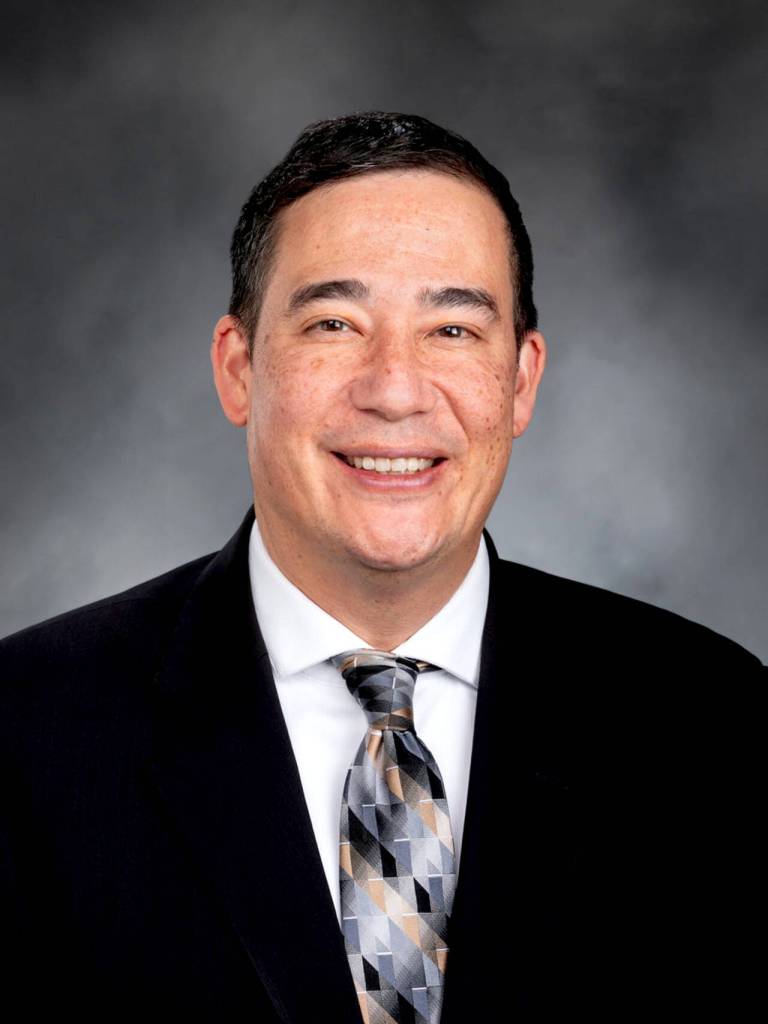
PORT ANGELES — During his visit to the North Olympic Peninsula, Secretary of State Steve Hobbs discussed election security measures and ways federal legislation — or the U.S. Supreme Court — may impact voting in Washington state.
Hobbs, a former state senator who was elected to statewide office in 2021, oversees the elections process, state libraries and corporations and charities as well as the state archives.
He pointed to the state’s 39 counties and the work local auditors’ offices perform but also acknowledged misinformation campaigns that suggest elections are compromised by any number of factors, including cybersecurity, deceased voters or noncitizens casting ballots.
“We didn’t tell our story about elections,” he said Tuesday during a visit to Peninsula Daily News. “We need to talk more about that.”
Hobbs said auditors offices check every signature against a database that’s shared not just with the federal government but with other states, and they’re constantly updating voter rolls with information ranging from when someone moves jurisdictions to when someone dies.
Actual incidents of ineligible voting are incredibly rare, according to a news release. There have been just 15 cases of noncitizen voting in the state of Washington — out of 1,620 nationally — between 1982 and 2025, the Secretary of State’s office said.
In the 2024 statewide race for commissioner of public lands, he said 58 ballots were cast by people who filled out their ballot legally but later died.
In separate elections, he said audits have found when a person has tried to forge their partner’s signature on a ballot, or when they have voted multiple times — even in two different states.
Hobbs cited one case of a person who voted in both Washington and Colorado elections. Upon investigation, he said the person was part of a voter registration effort in Colorado, and they claimed they only voted in the local election there and the federal election in Washington.
That’s still against the law, Hobbs said.
In another case from Lewis County, a man voted in November 2022 in elections in both Washington and Oregon, claiming he could because they were separate elections. A state appeals court overturned the man’s felony conviction in January, concluding that because candidates and measures were different on the two ballots that a person could interpret them as different elections under state law.
The state Legislature closed that loophole this session, clarifying the definition of an “election” and that voters could only vote once.
“The point is, these things are caught,” Hobbs said.
During his time in office, cybersecurity has become an emerging issue. In one case, he said cyberactors attacked a Clark County database, although it was quickly discovered and the voter database was intentionally disconnected for about 100 hours.
The cybersecurity protection system, known as an Albert sensor, has detected IP addresses from foreign countries — Hobbs specifically named Russia — with attempts to access or influence local elections.
“The threat is real,” he said.
One county conducted an election to remove its Albert sensor, and voters approved it, Hobbs said. Following an open house in that county that included information from Homeland Security, the FBI and the Air National Guard, the Legislature eventually passed a law that said local elections offices must have the security measure in place.
“You will either have it or we will sue you,” Hobbs said.
Nationally, the U.S. Supreme Court heard arguments on Monday for a case in Mississippi that involves mail-in ballots and their postmark. The question to be resolved is whether or not ballots that arrive after election day but have a postmark stamped on that day can still be counted in the election.
Hobbs said nearly half of Washington’s mail-in ballots come in after election day, but they are counted because of the valid postmark.
If the Supreme Court determines the ballots can’t be counted after election day, it would hurt military members and anyone who casts a ballot overseas, Hobbs said.
“It’s disconcerting,” he said. “Hopefully the Supreme Court will not toss out what we have here.
“If they do, we’re going to have to quickly get the word out.”
Last year, the U.S. Postal Service changed its rules on postmarking, moving it to when the piece of mail is automated for processing rather than when it’s collected. That could lead to 24- to 48-hour postmark delays, Hobbs said.
“It definitely caused a spike in rejected ballots,” he said. “It’s discouraging.”
Hobbs also pushed back on pending federal legislation known as the SAVE America Act, which the U.S. House passed last month. The act requires voters to provide proof of citizenship and a photo ID at the time of voting.
“It would really make it hard for states like ours to do mail-in voting,” he said.
During his time on the Peninsula, Hobbs also visited the Clallam Bay Corrections Center library, which will be staffed and available to inmates for the first time in six years.
He also pointed to recent efforts to open an office in Cheney for corporations and charities, and he said the original 1889 state constitution was on display in the governor’s office in January.
________
Editor Brian McLean can be reached by email at brian.mclean@peninsuladailynews.com.