
Inslee extends stay-home order through May
Published 1:30 am Friday, May 1, 2020


By Rachel La Corte | The Associated Press
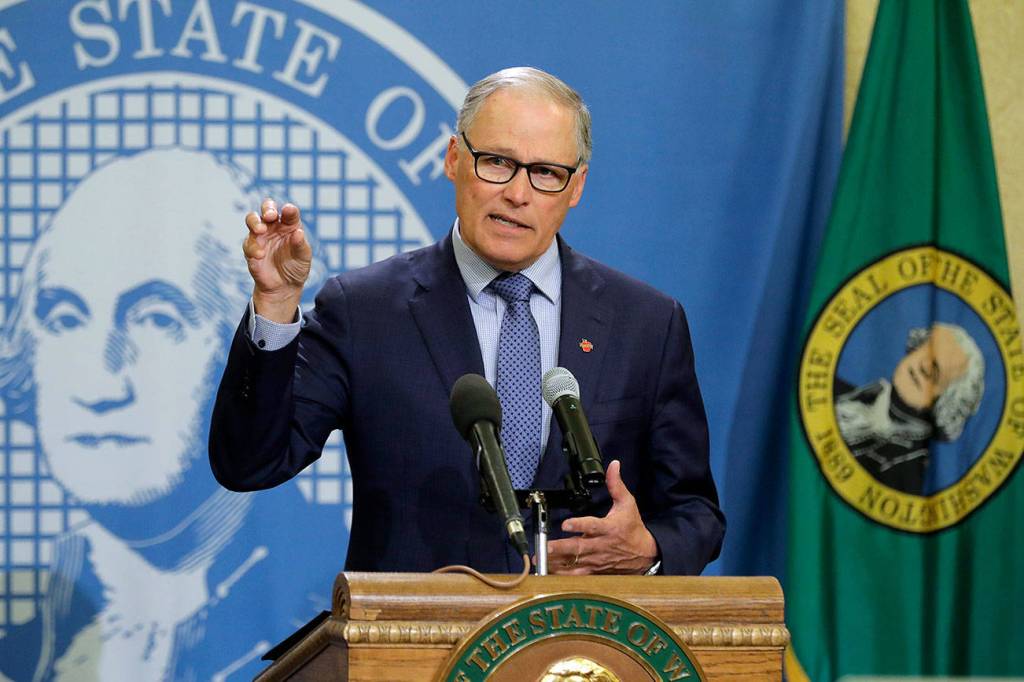
OLYMPIA — Gov. Jay Inslee said today he is extending the state’s coronavirus stay-at-home order through at least May 31 and that he will ease the restrictions in four stages, starting with allowing retail curbside pickup, automobile sales and car washes by mid-May.
“We have not won this fight against this virus,” Inslee said.
There will be a minimum of three weeks between each phase, though he said some counties with lower numbers of cases and deaths may be able to open parts of their economy sooner if approved by the Department of Health.
The Democrat said the first phase would also allow drive-in spiritual services with one household per vehicle.
Since last Friday, Inslee has announced the easing of some restrictions, including the resumption of existing construction projects and allowing day use activities at state parks and some outdoor recreation like hunting, golfing and fishing to start next Tuesday. Earlier this week, he said some non-urgent surgeries also could resume.
Inslee said while more outdoor activities will start next week, the ban on large gatherings will remain in effect.
The next phase would allow camping, and new construction, as well as in-store retail purchases with restrictions. Barber shops and salons could also reopen at that time, and restaurants could reopen at half capacity and table sizes limited to five.
The third phase would expand group gatherings to 50 or less, including sports activities and would allow restaurants to increase capacity to 75 percent. Gyms and movie theaters could reopen at half capacity, but nightclubs and entertainment venues will still remain closed during this phase.
During the last phase, most public interactions would resume, with social distancing, with bars, restaurants and entertainment and sporting venues returning to their maximum capacity.
Inslee has said several elements have been at play in his decision making, and that all of them need to see reduced risk: disease activity, health care system readiness, testing capacity and availability, an increase in case and contact investigations once a case is confirmed and risk to vulnerable populations, like those in assisted living facilities.
He said while there is continuing evidence that the spread of COVID-19 has been suppressed he urged caution in moving to lift restrictions too quickly, and said officials will look at how the state is faring after each phase, and said the three week suggestion is a minimum.
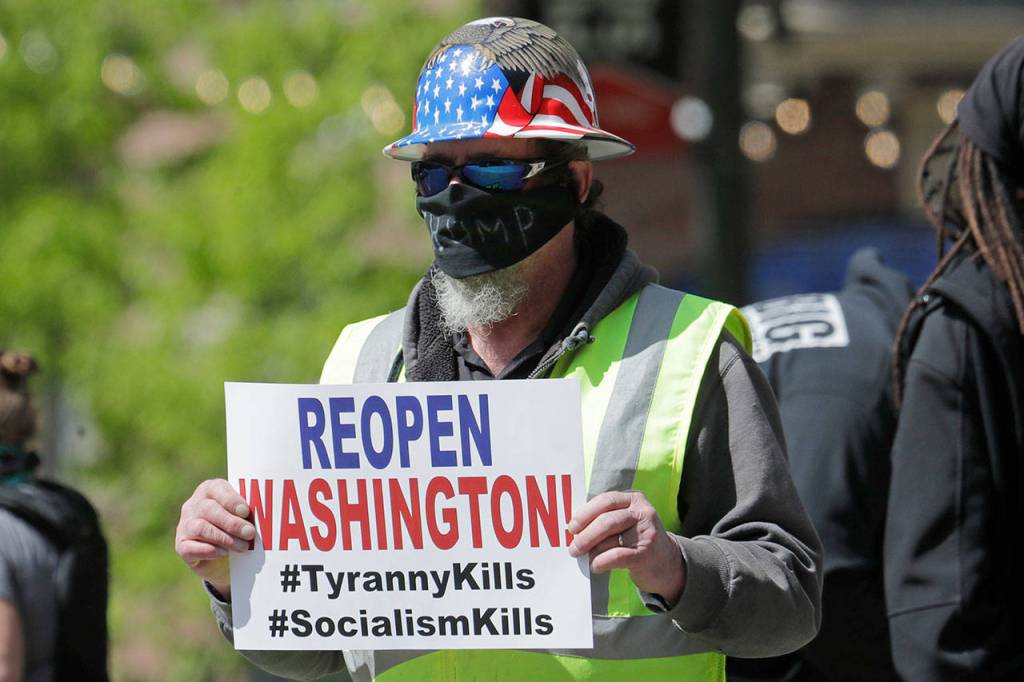
Also Friday imitative promoter and GOP gubernatorial candidate Tim Eyman joined Franklin County Commissioner Clint Didier and others in filing a federal lawsuit against Inslee.
They say the governor’s directives have imposed “unacceptable tyranny.” The Seattle Times reports the lawsuit was filed in U.S. District Court for the Western District of Washington.
Washington state saw the nation’s first confirmed COVID-19 case in January, as well as the first deadly cluster, at a Seattle-area nursing home. Inslee in March was among the first governors to order sweeping social distancing restrictions.
More than 14,300 people in Washington state have tested positive for the virus, which causes mild to moderate symptoms in most patients, and at least 814 people have died.
While the vast majority recover, the coronavirus is highly contagious and can be spread by those who appear healthy and can cause severe illness and death in some patients, particularly the elderly and those with underlying health conditions.